Custom Molded Sealing Solutions Built for Your Application

Rubber gaskets and seals play a critical role in protecting equipment, preventing leaks, controlling vibration, and helping components perform reliably in demanding environments. When an off-the-shelf part cannot meet your fit, function, material, or performance requirements, Qualiform manufactures custom rubber gaskets and seals designed around your exact application.

As a U.S.-based custom rubber molding company, Qualiform produces molded rubber gaskets, custom rubber seals, rubber washers, bonded sealing components, and application-specific rubber parts for industrial, plumbing, aerospace, medical, electrical, transportation, appliance, and other demanding markets.

Whether you need a prototype, replacement part, small run, or production-volume gasket, our technical team can help evaluate the part design, material, tooling, manufacturing process, and performance requirements needed to create a dependable sealing solution.

Have Questions?

Our Expert Tech Staff is Ready to Assist You with All Your Custom Rubber Gasket & Seal Needs

Types of Custom Rubber Gaskets and Seals We Manufacture

Qualiform manufactures a wide range of custom sealing components designed to meet specific environmental, mechanical, and performance requirements. Common products include:

Static Seals Vs. Dynamic Seals

Static Seals

Used in assemblies with little to no movement between mating surfaces. These seals rely on compression to create a tight, leak-free barrier in applications like covers, housings, flanges and enclosures.
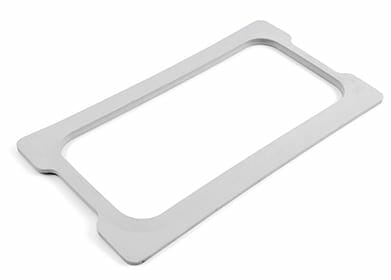
static seals
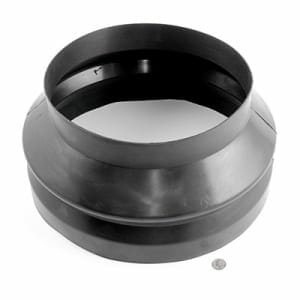
dynamic seals

Dynamic Seals

Designed for applications with movement, pressure or repeated motion. These seals must perform under friction, wear, temperature changes and stress while maintaining sealing integrity.

Materials To Match Your Environment

EPDM

Excellent for water, steam, ozone, and outdoor sealing applications.

Nitrile

Strong resistance to oils, fuels, and many industrial fluids.

Viton (FKM)

High heat and chemical resistance for demanding environments.

Neoprene

Balanced durability, weather resistance, and chemical performance.

Butyl

Excellent moisture and gas resistance for sealing applications.

Other Materials

Custom compounds available for unique application requirements.

Manufacturing Process

Ideal for larger, thicker or simpler parts. Cost-effective for low to medium production volumes
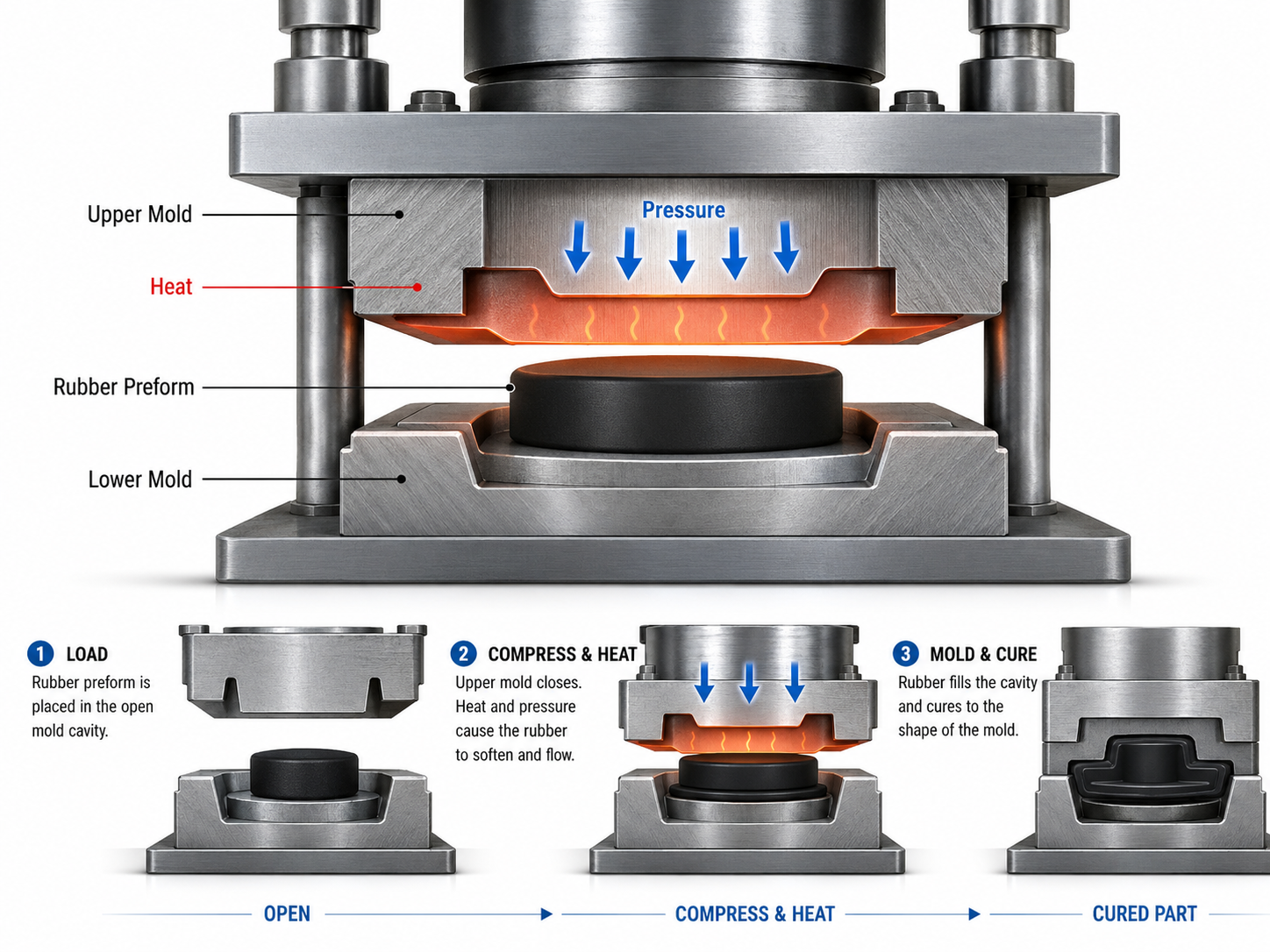
compression molding

Better control of material flow for detailed parts and inserts. Excellent for rubber-to-metal bonded components.
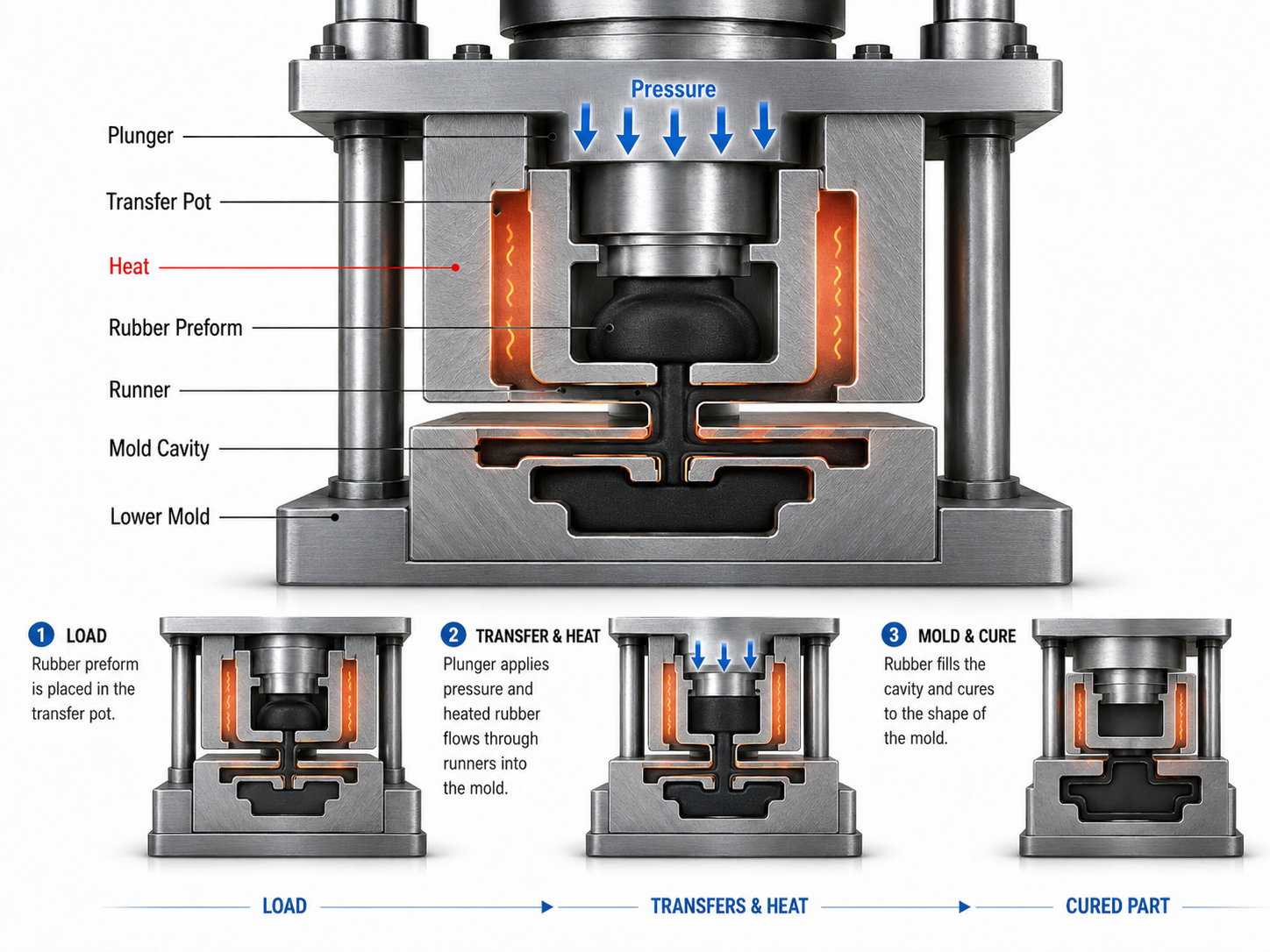
Transfer Molding

Best for complex shapes, tight tolerances and high-volume production with consistent results and fast cycle times.
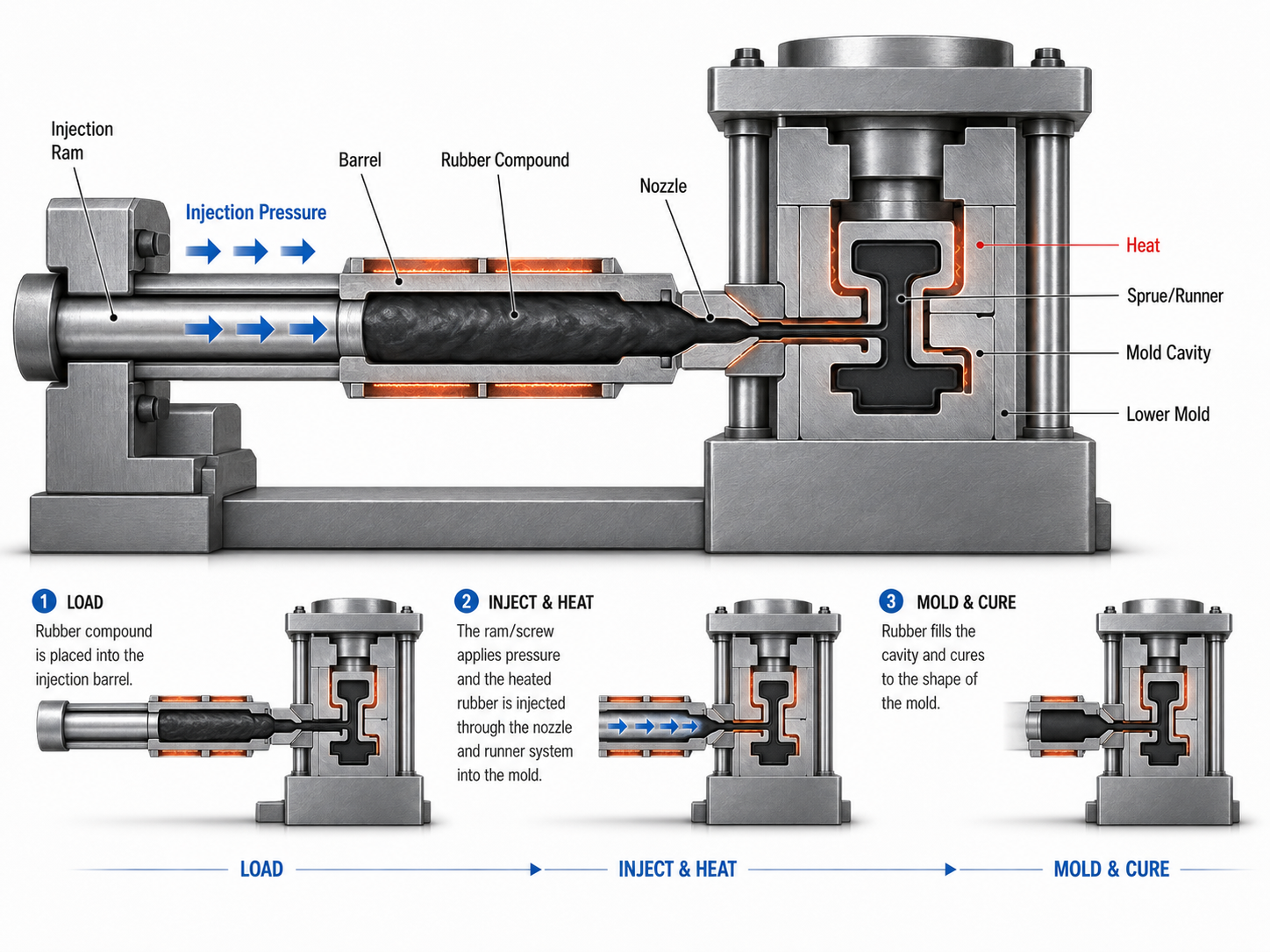
Injection Molding

Mold rubber directly to metal or other inserts for added strength, structure and performance.
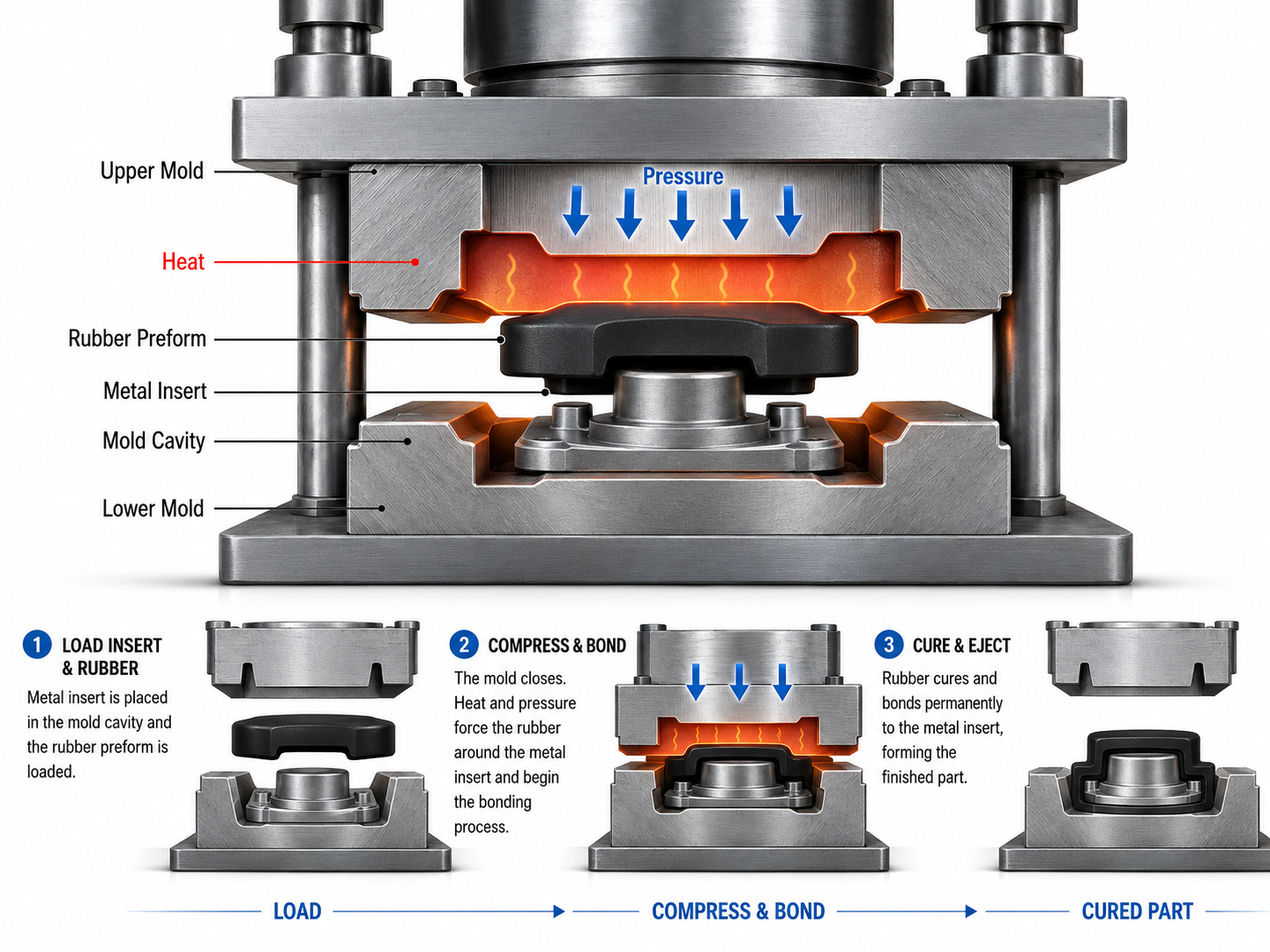
Rubber to Metal Bonding

30+ Years

of Experience

as a full-service rubber products manufacturer

Rubber Transfer Molding FAQ’s

First, please provide us with a print or a sample of the desired part for review.  To assist with tooling design, provide your estimated annual usage requirements along with the desired material.  If you don’t know the material, just describe the environment in which it will be used and we can come up with a solution.

Qualiform Rubber Molding is able to assist with the entire process, from the initial design phase to the last approval step for rubber gaskets and seals.

Our team can decide what the proper polymer for your application is, as well as decide what   durometer requirements are best.

Since our tooling is manufactured in the USA, we are able to produce quick lead times. The average lead-time for prototype tools is 2-4 weeks.  For compression or transfer molding, the average lead-time is 6-8 weeks.  For rubber injection molding, the average is 8-10 weeks.  We understand sometimes customers require a faster lead-time and we work with our tooling shop closely to fulfill customer time requirements.

Our presses can accommodate most tooling. In some instances, minor tooling modification may be made.

Tooling is customized via customer design requests. Therefore, once we receive payment, tooling is owned by the customer.

From the receipt of an order, most parts can be shipped out within 3-4 weeks. It can also depend on the quantity of the order.

Qualiform works with multiple supply chains to source the metal stamping and inserts requested.

We work with our rubber suppliers to provide precise color matches for your products.

Choosing the right material is critical when it comes to rubber seals and gaskets. The performance and longevity of a seal depends on how well the material can withstand its operating environment. An expert rubber gasket supplier considers the following to ensure that each component perform as intended, not just at the start, but throughout the indicated service life:

Temperature Resistance

Materials behave differently at high and low temperature. Selecting the proper material that does not stiffen, soften and break down at a certain temperature exposure prevents premature failure of rubber seals and gaskets.

Chemical Compatibility

Rubber seals and gaskets often come in contact with oils, fuels, solvents, acids and other aggressive substance. Ensuring the material’s compatibility to the substance that it will encounter will prevent swells, cracks and degradation.

UV/Ozone Exposure

Outdoor and industrial environments expose materials to sunlight (UV) and ozone, which can cause embrittlement and cracking over time. Certain elastomers are formulated for excellent UV/ozone resistance, ensuring that outdoor-exposed seals and gaskets stay flexible and effective.

Compression Set

Low compression set indicates that a seal or gasket can maintain contact between surfaces despite repeated loads or thermal cycling, which is a key factor for leak-free performance in dynamic and fluctuating conditions.

Abrasion and Tear Strength

Applications with movement, friction and repeated assembly are prone degradation leading to leaks that may require replacement. to Rubber seals and gaskets with high abrasion and tear resistance are durable and requires less maintenance.

With Qualiform LLC, we produce a wide variety of configurations tailored to different sealing needs:

Static Seals

Static seals are designed for assemblies with little to no relative motion between parts such as door seals, hose joints and flange faces. They work by closing gaps and preventing leaks, providing a reliable, long-term seal with minimal tear.

Dynamic Seals

These seals are often applied in materials that involve repetitive motion such as rotary shafts, hydraulic pistons, piston seal rings and shock absorbers. These seals maintain containment while allowing movement.

Flange Gaskets

Ring-shaped seals installed between mating pipe, valves or equipment flanges to create a tight seal under pressure, preventing gas or fluid leaks. These are commonly seen in piping systems, fuel lines and HVAC applications.

Face Gaskets

These seals are mounted on flat surfaces of an assembly part and are designed to seal interfaces where pressure or fluid leakage could occur. These are used in automotive, HVAC, pump systems, machinery housings and mechanical enclosures.

Bonded Seals

Also known as Dowty seal, in which a molded elastomer ring is bonded to a metal washer for reliable sealing in high pressure application. The metal washer provides structural support while the rubber element creates a tight seal, making it ideal for hydraulic and pneumatic fittings.

Custom Shapes

These are tailor-made seals and gaskets molded to specific geometries and performance requirements, making them ideal for OEM equipment or extreme operating conditions, where off-the-shelf products won’t suffice.

T-shaped Rubber Gasket

Living up to its name, these have a distinctive “T” cross-section designed for edge sealing, panel gaps and door perimeters, making them highly effective for weather stripping applications.

Flat Round Rubber Gasket

These are classic circular, flat-profile seals typically cut from sheet material or molded, available in multiple thicknesses and diameters to suit various applications. They are commonly used for pipe flanges, covers, lids, housings, hydraulic flanges, drains, and other general fluid sealing surfaces.

Circular Rubber Gasket

Precision-molded ring-shaped seals with consistent cross-sections designed to seal around circular openings in pressure fittings, valves, bulkhead seals, and flange connections. Common forms include O-rings and flat washer-style gaskets, widely used in pipe fittings and other round sealing applications.

Selecting the right manufacturing method is crucial for quality, precision, cost, and performance. The most common processes used by rubber gasket suppliers like Qualiform LLC include:

Compression Molding

In this process, the rubber is placed in an open mold and heated under pressure, causing it to cure into the mold’s shape, making this method ideal for simple, larger parts and cost-sensitive small to medium production runs. It offers lower tooling costs and works with many elastomers, commonly used for basic gaskets, large seals, and industrial components.

Transfer Molding

Transfer molding is a process in which a preheated rubber is forced through a sprue into a closed mold, curing into intricate shapes with tighter tolerances than compression molding. This method provides better surface finish and consistency, making it ideal for mid‑complex gaskets and bonded assemblies with inserts.

Injection Molding

Liquid rubber is injected under high pressure into a closed mold, curing into complex shapes with high precision and repeatability. This process is ideal for medium to high‑volume production of intricate seals and tight‑tolerance gaskets, offering fast cycles and minimal scrap despite higher tooling costs.

Rubber-to-Metal Molding

Rubber is molded or vulcanized directly onto metal or plastic parts, combining elastic sealing with rigid support for bonded seals, grommets, and assemblies. This process, using injection or transfer molding, ensures durable attachment for components like vibration‑damping mounts, precision seals, rollers, and bumpers.

Every sealing application has unique demands. Below is a guide to common elastomer materials and their strengths:

  • EPDM Rubber – Excellent weather, ozone, and heat resistance; ideal for outdoor and water sealing applications.
  • Nitrile Rubber – Strong resistance to oils, fuels, and hydraulic fluids; widely used for automotive and industrial sealing.
  • FKM/Viton Rubber – Premium heat and chemical resistance; perfect for high-temperature and aggressive chemical environments.
  • Silicone – Exceptional temperature range and flexibility; great for food, medical, and high-heat applications.
  • Neoprene Rubber – Balanced performance with good weather and chemical resistance; often used in refrigeration and general sealing.
  • Butyl Rubber – Low gas permeability and excellent damping; common in pharmaceutical, air-bladder, and insulation seals.
  • Natural Rubber – High abrasion resistance and elasticity; suited for dynamic seals with minimal chemical exposure.
  • Rigid and Flexible – For structural or cushioning applications
  • Thermoplastic Elastomers (TPE) – Combines rubber-like flexibility with plastic processing benefits.
  • Synthetic Rubbers – Engineered for specific chemical, temperature, or mechanical requirements.