
Engineering Truth: Some Properties Can’t Be Synthesized

Seventy years of synthetic rubber development, yet engineers still return to natural rubber properties when mechanical performance is non-negotiable. Why? Because nature optimized this polyisoprene polymer over millions of years, creating a molecular structure that delivers tensile strength, tear resistance, and energy absorption that synthetic alternatives struggle to match.

As a trusted rubber molding manufacturer, we leverage these natural advantages to deliver components that meet the highest demands. While synthetic rubbers excel in specific chemical environments, natural rubber properties dominate where pure mechanical performance matters. At 3,500 PSI tensile strength and 900% elongation, these aren’t just numbers—they represent the difference between component failure and reliable operation under stress.
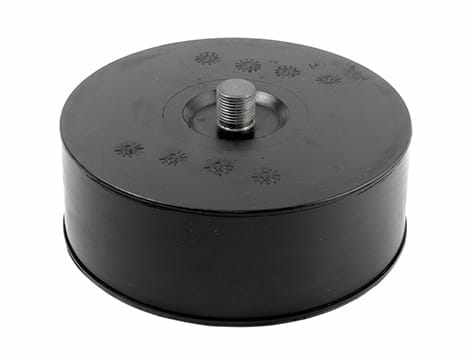
natural rubber products

Ready to Start Your Custom Natural Rubber Molding Project?

Get expert material recommendations and precise quotes from our technical team. With 50+ years of experience in natural rubber molding, we’ll ensure your natural rubber products meet exact specifications.

Natural Rubber Properties: Performance Data Engineers Need

Mechanical Property Benchmarks

Tensile Performance:

  • Tensile Strength: 500-3,500 PSI (exceeds most synthetics)
  • Ultimate Elongation: 300-900% (industry-leading stretch)
  • Tear Resistance: 150-400 lbs/in (exceptional crack resistance)
  • Modulus at 300%: 200-2,000 PSI (application-tunable)

Dynamic Performance:

  • Compression Set (70°C/22hrs): 10-25% (excellent recovery)
  • Resilience: 85-95% (outstanding energy return)
  • Hysteresis Loss: <15% (minimal energy dissipation) Fatigue Life: >10⁶ cycles (superior durability)

Working Limits:

  • Temperature Range: -70°F to +180°F
  • Hardness Range: 30-95 Shore A
  • Continuous Service: 180°F maximum
  • Brittle Point: -80°F

Material Selection Logic: When to Specify Natural Rubber

Performance Requirements Matrix


Application Demand Natural Rubber Advantage Alternative Consideration
Maximum Tensile Strength 3,500 PSI achievable Synthetic limit ~2,500 PSI
Extreme Elongation 900% without failure Synthetic maximum ~700%
Vibration Dampening Optimal frequency response Synthetics offer narrow ranges
Tear Propagation Resistance Molecular structure prevents crack growth Synthetics show brittle failure modes
Temperature Cycling Maintains properties -70°F to +180°F Limited synthetic temperature ranges

Design Constraints & Workarounds

Where Natural Rubber Fails:

  • Oil/petroleum contact (use protective barriers)
  • Ozone exposure (antiozonant additives or protective coatings)
  • Continuous outdoor use (UV stabilizers required)
  • Chemical processing (consider synthetic alternatives)

Engineering Solutions: Natural rubber products can operate in challenging environments through proper design. Protective coatings, environmental barriers, and antioxidant systems extend application ranges significantly.

Maximizing Natural Rubber Properties and Performance

Vibration Isolation Engineering

Natural rubber’s viscoelastic properties create unmatched vibration dampening performance. The molecular structure provides optimal balance between stiffness and damping across frequency ranges.

Isolation Applications:

  • Machinery Mounts: 95% vibration reduction at resonance
  • Building Seismic Isolation: Multi-story structure protection
  • Precision Equipment: Sub-micron vibration control
  • Transportation: Vehicle suspension optimization

High-Stress Mechanical Systems

When components face repeated loading, impact, or extreme deformation, natural rubber properties provide reliability that synthetic alternatives cannot match.

Critical Applications:

  • Industrial Bearings: Self-lubricating, high-load capacity
  • Shock Absorbers: Energy absorption up to 80% efficiency
  • Flexible Couplings: Misalignment compensation with power transmission
  • Expansion Joints: Building movement accommodation

Vulcanization Science

Cross-link density directly affects natural rubber properties. Our vulcanization control optimizes sulfur networks for specific performance targets.

Cure System Selection:

  • Conventional Sulfur: Maximum tensile strength, good aging
  • Semi-EV Systems: Balanced properties, improved heat resistance
  • Efficient Vulcanization: Superior aging, lower compression set
  • Peroxide Cure: Enhanced heat resistance, food-grade compliance

Compound Engineering

Natural rubber properties can be enhanced through strategic compounding without sacrificing base performance characteristics.

Performance Modifiers:

  • Carbon Black: Reinforcement up to 300% strength increase
  • Silica: Improved tear resistance, lower hysteresis
  • Zinc Oxide: Vulcanization activation, thermal conductivity
  • Antioxidants: Extended service life, ozone protection

Common Failure Modes & Prevention

Ozone Cracking:

  • Problem: Surface cracking under stress + ozone exposure
  • Solution: Antiozonant additives, protective wax systems
  • Design: Minimize surface stress concentrations

Thermal Degradation:

  • Problem: Hardening and loss of elongation above 180°F
  • Solution: Heat-resistant cure systems, thermal barriers
  • Design: Heat sink integration, airflow management

Oil Swelling:

  • Problem: Dimensional change and property loss in oils
  • Solution: Protective barriers, alternative material selection
  • Design: Sealed environments, secondary containment

Property Validation Protocol

Every natural rubber product undergoes comprehensive testing to verify performance specifications are met across the full property range.

Mechanical Testing:

  • Tensile strength verification (ASTM D412)
  • Tear resistance measurement (ASTM D624)
  • Compression set evaluation (ASTM D395)
  • Durometer confirmation (ASTM D2240)
  • Dynamic property analysis

Environmental Testing:

  • Accelerated aging studies
  • Ozone resistance evaluation
  • Temperature cycling verification
  • Chemical compatibility confirmation

Statistical Process Control

Our manufacturing processes maintain natural rubber properties within tight specifications through real-time monitoring and feedback control.

Process Variables:

  • Mix temperature ±3°F control
  • Cure time ±30 second precision
  • Pressure maintenance ±5 PSI
  • Post-cure cooling rate optimization

Performance Optimization Consulting

Our engineering team works with customers to maximize natural rubber properties for specific applications through material selection, design optimization, and processing refinement.

Design Analysis Services:

  • Finite element stress analysis
  • Dynamic response modeling
  • Life cycle prediction
  • Failure mode assessment

Material Development:

  • Custom compound formulation
  • Property optimization trials
  • Accelerated testing protocols
  • Performance validation

Processing Expertise

40+ years of natural rubber processing experience enables optimization of properties through manufacturing parameter control.

Capabilities:

  • Large part molding (48″ x 56″ press capacity)
  • Precision tolerances (±0.005″ achievable)
  • Complex geometries with consistent properties
  • Metal bonding integration

Technical Specifications Summary

  • Base Material: Polyisoprene (Hevea brasiliensis)
  • ASTM Classification: D-2000 Type AA
  • Processing: Injection molding, compression, transfer molding
  • Property Range: 30-95 Shore A, up to 3,500 PSI tensile
  • Temperature Service: -70°F to +180°F continuous

Start Your Natural Rubber Project Today

Work with our engineers for custom formulations and precise quotes backed by 40+ years of processing expertise.